Post hole formula
A post hole is estimated as a cylinder: pi times radius squared times depth. Diameter is entered in inches and depth can use feet and inches.
Multiply by the number of holes, then add waste and round the bag count up.
 Pour Calculator
Concrete, bags, yards and cost
Posts and footings
Estimate concrete for fence posts, deck footings and round holes.
Concrete estimate
Printable reference
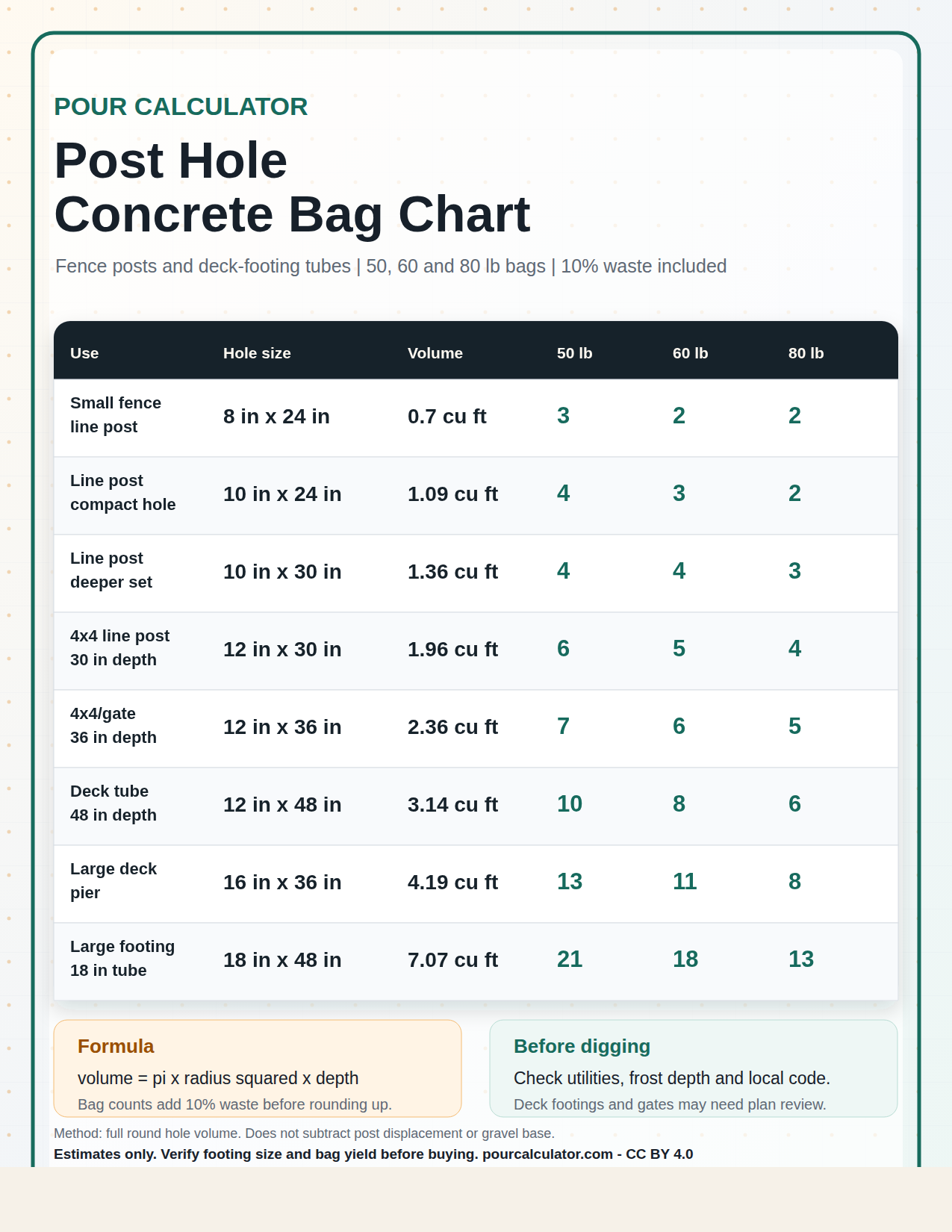
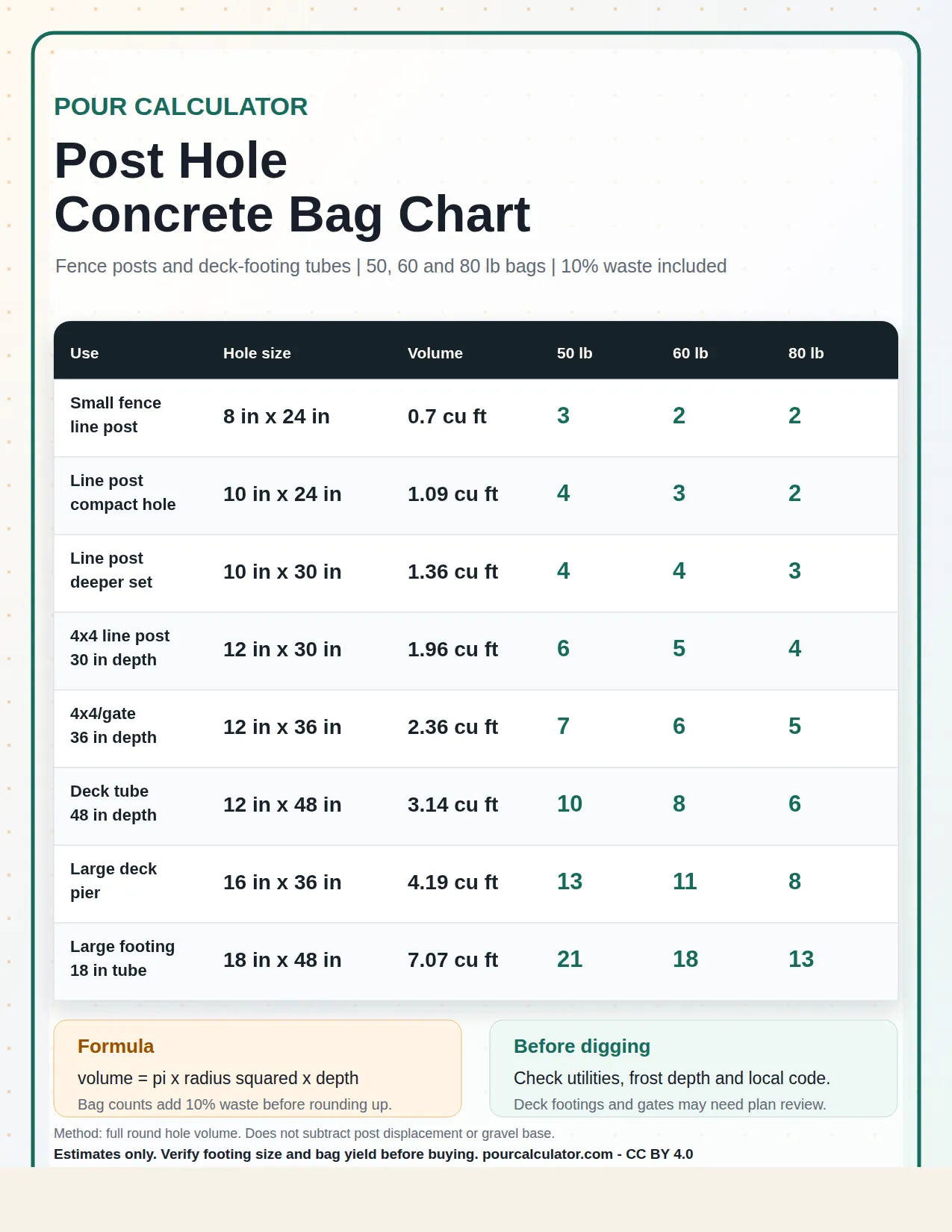
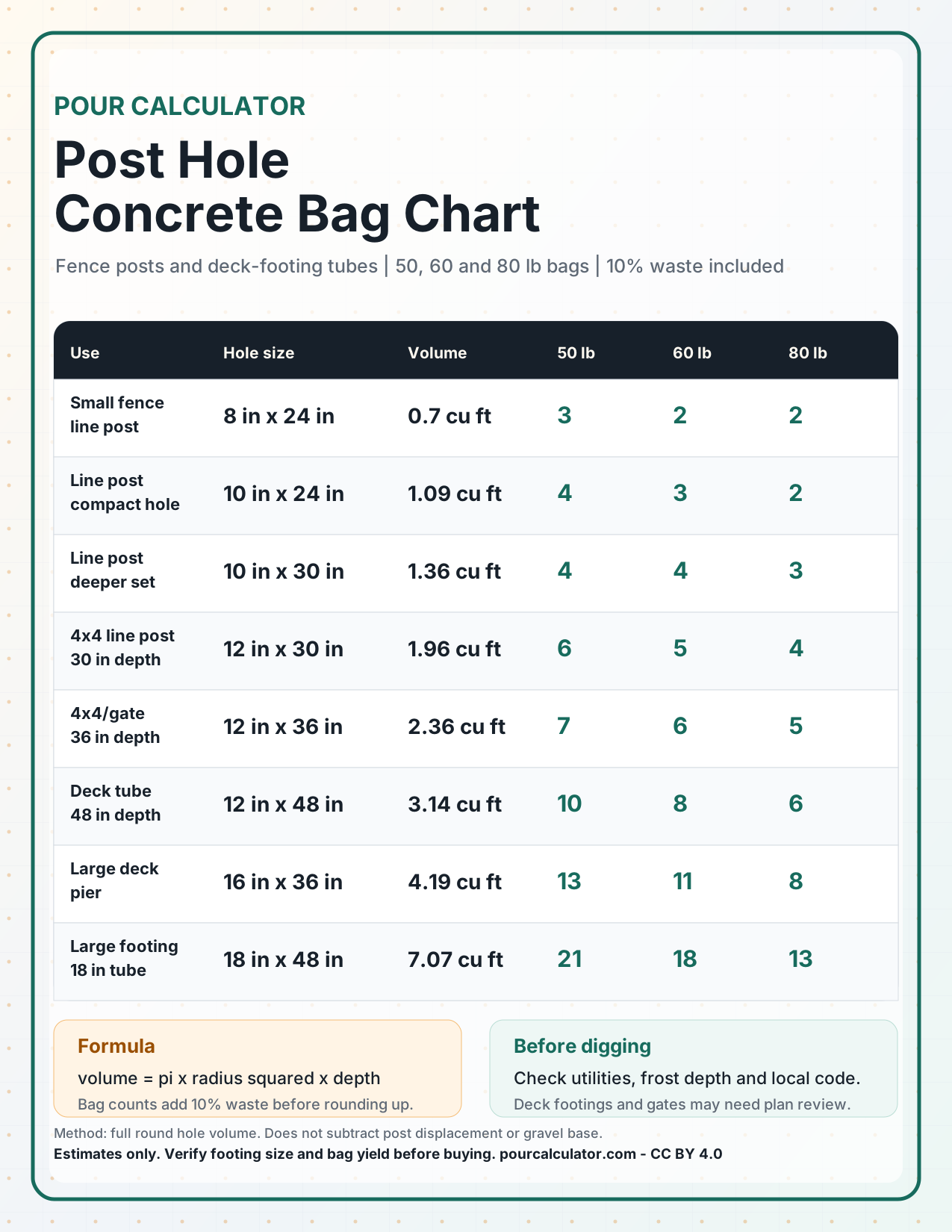
Use this chart to sanity-check common round fence-post holes and deck-footing tube forms before buying bagged concrete.
Source note: counts assume a full round hole, 10% waste, and approximate bag yields. Confirm hole size, footing requirements and bag yield before checkout.
A post hole is estimated as a cylinder: pi times radius squared times depth. Diameter is entered in inches and depth can use feet and inches.
Multiply by the number of holes, then add waste and round the bag count up.
For a 4x4 fence post in a 12 in diameter hole that is 36 in deep, the calculator estimates about 2.36 cubic feet before waste. With 10% waste, that rounds to 5 bags if you choose 80 lb bags.
For a run of eight line-post holes at 10 in diameter and 30 in deep, the estimate is about 10.91 cubic feet before waste. With 10% waste, that rounds to 20 bags of 80 lb concrete.
A 12 in diameter round footing or tube form at 48 in deep is about 3.14 cubic feet before waste. With 10% waste, that rounds to 6 bags of 80 lb concrete.
An 18 in diameter round footing at 48 in deep is about 7.07 cubic feet before waste. With 10% waste, that rounds to 13 bags of 80 lb concrete.
It depends on hole diameter and depth. Enter both dimensions and the number of posts to get a bag estimate.
Yes for a volume estimate, but deck footings may require code-specific sizing, frost-depth checks and inspections.
This calculator estimates concrete only. Any gravel base should be estimated separately.
No. It estimates the full round hole as concrete. That is conservative for bag planning, but check the actual hole and post layout before buying.